English
The global market size of wood screws reached 29.87 billion yuan in 2025, and is expected to approach 43.44 billion yuan by 2032. The compound growth rate will remain at 5.5% over the next six years. The industry as a whole is showing a stable and positive development trend. Driven by multiple factors such as technological innovation, product upgrading, and scenario expansion, the wood screw industry is entering a new stage of high-quality development.
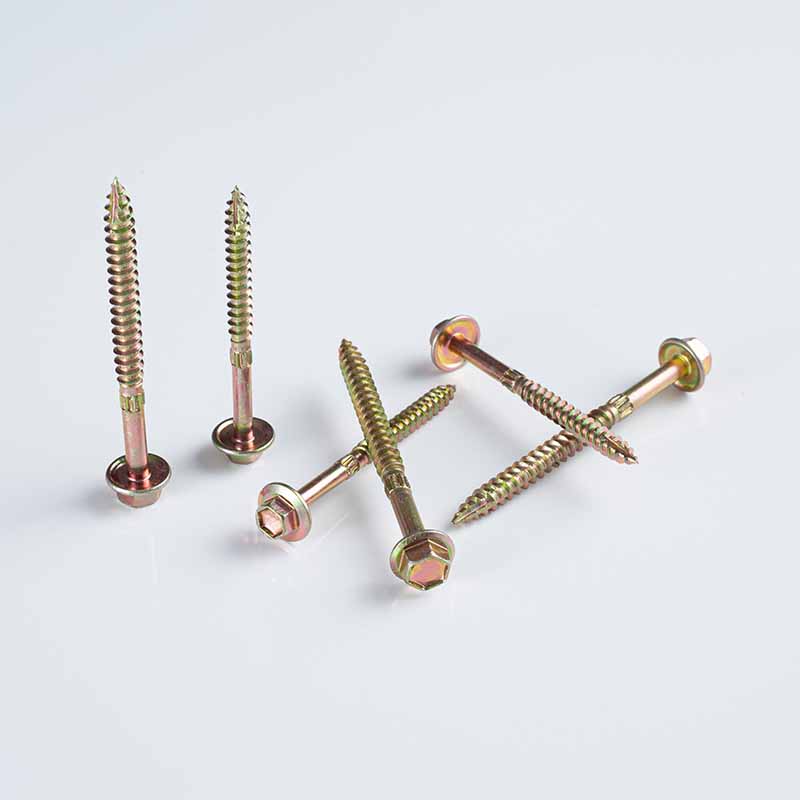
Wood screws, as heavy-duty fasteners specifically used for fixing wood or wood structures, enjoy core advantages such as large size, thick threads, and durable structure. They are widely applied in residential buildings, commercial decoration, industrial manufacturing, furniture assembly, and other fields. Especially in scenarios with high requirements for strength and lifespan, such as wood beam connections and outdoor wooden devices, they play an irreplaceable role. With the acceleration of building industrialization, the promotion of prefabricated wooden structure residences, and the large-scale production of customized furniture, the market has raised higher requirements for the performance, precision, and environmental friendliness of wood screws, driving the industry to transform from traditional manufacturing to technology-driven.
Technological innovation has become the core engine for industry upgrading. Currently, wood screw technology has upgraded from the traditional mechanical self-locking mechanism to a comprehensive system integrating material science, precision manufacturing, and intelligent technology. In structural design, the helix angle is optimized to 15-25 degrees, and the tooth angle adopts a 60-degree design, which can effectively cut wood fibers and improve connection stability; the four corners of the head design increase the torque transmission efficiency by 35-40% compared to traditional styles, significantly reducing slippage during the tightening process. In terms of material application, the proportion of high-strength low-alloy steel (HSLA) continues to increase, with product tensile strength reaching 1200-1400 MPa, 35-40% higher than traditional carbon steel products. At the same time, the popularization of stainless steel, galvanized, and other anti-corrosion materials effectively solves the problem of ordinary wood screws being prone to rust outdoors, making them suitable for more complex usage scenarios.
Intelligent manufacturing and industrial chain integration further enhance the industry's competitiveness. Currently, domestic leading enterprises have gradually introduced precision cold forging forming technology, with equipment precision controlled within ±0.01mm, and mold life exceeding 1 million times. Combined with intelligent production technology, production efficiency has increased by 180-220%, and product qualification rate has risen from 85% to over 98.5%. The digital integration of the upstream and downstream supply chain has achieved remarkable results. The optimization of the upstream raw material supply chain has reduced procurement costs by 15-20%, and the inventory turnover rate has increased to 2.5 times that of traditional models. The downstream application end has achieved automatic matching of connection points and precise calculation of usage quantity through BIM + fastener digital selection system, reducing project fastener loss rate from 8.3% to 4.1%.


en